
At the end of trade on the BSE, RIL's market capitalisation was Rs 7,14,668.54 crore, while India's largest IT firm by revenue TCS slipped to the second spot with a valuation of Rs 7,06,292.61 crore.
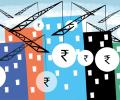
Real estate investment trusts (Reits) are in talks with regulatory bodies - the Securities and Exchange Board of India (Sebi) and the Reserve Bank of India (RBI) - to seek changes in regulations that will allow easier access to capital. The Indian Reits Association (IRA) said it has approached the market regulator seeking to get classified as an 'equity' asset, which will open the path for their inclusion in equity indices and also make investment by mutual funds (MFs) easier. The association is also in active discussions with the RBI to allow banks to lend to a Reit.

Government-owned Life Insurance Corporation of India (LIC) has seen substantial gains from its investments in Adani group shares, which have experienced a significant recovery over the past year. The value of LIC's stake in Adani group companies surged by 51.6 per cent, or Rs 22,591 crore, reaching Rs 66,388 crore as of Friday's close. This compares to Rs 43,797 crore on May 31 last year, according to stock exchange data.

The four-day carnage in stock markets has left investors poorer by over $100 billion, while they suffered a loss of more than Rs 1 lakh crore in Wednesday's trade itself.

Foreign portfolio investors' (FPIs') net investments in the domestic debt market surged in December, marking a 77-month high, that is, since July 2017. According to market participants, this significant uptick in FPI inflows can be attributed to the post-domestic policy outcome and the US Federal Reserve's dovish stance at the December policy. FPI inflows into debt stood at Rs 18,393 crore in December against Rs 14,106 crore in November, according to data on the National Securities Depository Limited.

It is being suggested that apps, such as WhatsApp and Telegram, should share their APIs with each other to ensure there is interoperability, just as it exists across email services.

The stock of United Spirits, the country's largest liquor company by market capitalisation (mcap), has gained 11 per cent over the past week on double-digit growth guidance, rising premiumisation trend, operationally in-line performance in the March (Q4FY24) quarter and a rally in consumer stocks. The revenue growth of the company came in at 7 per cent year-on-year (Y-o-Y) mirroring the growth of the prestige and above (P&A) segment. This segment comprising premium brands accounts for 88 per cent of the revenues.

BSE-listed companies' market capitalisation reached Rs 197.7 trillion on January 21, against India's nominal GDP of Rs 190 trillion during 12 months ended December 2020.

At the end of Monday's trading session, the market capitalisation of BSE-listed companies stood at Rs 1,51,86,312.05 crore against Rs 1,46,58,709.68 crore on Friday.
Mukesh Ambani on Monday became the first Indian to head a group of companies with a combined market value of over Rs 5 trillion, while his group's flagship Reliance Industries became the country's first firm crossing the capitalisation of Rs 4 trillion. RIL's share price soared above 5 per cent to close at Rs 2,827, taking its market capitalisation to Rs 4,11,041.95 crore (nearly $104.22 billion).
Since September 13, 2013, when the Gujarat chief minister was announced as the party's choice for the country's top job, the Indian markets have rallied over 14 per cent, with Sensex companies adding Rs 4.7 lakh crore in value.
The market cap of the listed firms on the Bombay Stock Exchange and the National Stock Exchange on Monday declined by a whopping Rs 125,000 crore (Rs 1250 billion) to Rs 43,75,020 crore (Rs 43750.20 billion), thereby falling below the GDP of Rs 46,93,000 crore (Rs 46930 billion) at current market price, as per the real economy data released by the Reserve Bank of India on April 28 this year.
Within a day of slipping out of the coveted league of countries with trillion-dollar-size stock markets, India today regained this status as a 510-point strong Sensex rally boosted its market capitalisation to $1.02 trillion.

Coalition governments aren't necessarily a negative for the economy, though they can result in negative outcomes in the stock market if not already priced in before elections.

The combined market valuation of eight of the top-10 most valued companies zoomed Rs 190,571.55 crore last week, with Bajaj Finance emerging as the biggest gainer, reflecting bullish investor sentiment. While Reliance Industries Ltd (RIL) and Tata Consultancy Services (TCS) witnessed erosion in their market capitalisation, rest of the eight companies including Hindustan Unilever Limited, HDFC, ICICI Bank and Bharti Airtel emerged as gainers. The market valuation of Bajaj Finance jumped Rs 35,878.56 crore to Rs 2,63,538.56 crore, becoming the biggest gainer among the top-10 most valued firms.

Among the Sensex firms, Adani Enterprises and Adani Ports sustained their gaining momentum and traded higher by 4.40 per cent and 4.37 per cent, respectively. BPCL, Axis Bank, Mahindra & Mahindra and SBI were the other major gainers. On the other hand, HCL Tech, Infosys and Bajaj Auto traded in the negative zone with a loss of up to 1.54 per cent.
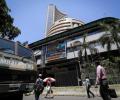
TCS, HDFC Bank, Infosys and ONGC saw a squeeze in their market capitalisation in holiday-shortened last week

'We see mid-and small-caps as a real pot of gold.' 'From a 10-15 years perspective, mid-and small-cap are likely to outperform the larger index, as they have done in the past.'

Investors' wealth eroded by a massive Rs 8,21,666.77 crore on Monday as the market saw a massive sell-off not seen in many months. The BSE benchmark Sensex plunged 1,170.12 points or 1.96 per cent to close at 58,465.89. This is the worst single-day drop for the gauge in over seven months. This was also the fourth straight session of decline for the Sensex.
With the market capitalisation crossing $1.6 trillion within a couple of months after piercing the magical $1 trillion mark, and a vibrant equity derivatives segment to boast, the Indian stock markets look much attractive in terms of depth as well, they add. The equity derivatives market in China is only a recent start and is yet to catch momentum.

The rankings of the rest of the countries in top 10 have remained unchanged.

The market capitalisation of the BSE-listed companies reached an all-time high of Rs 220.74 lakh crore on Thursday, helped by a bullish sentiment in the equity market. At the close of trade, their market capitalisation stood at Rs 2,20,74,421.11 crore. The 30-share BSE benchmark closed 97.70 points, or 0.19 per cent, higher at 51,115.22 on Thursday.
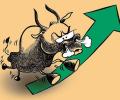
The market capitalisation of BSE-listed firms reached an all-time high of Rs 288.50 lakh crore on Wednesday amid an ongoing rally in equities, as the benchmark Sensex settled above 63,000-level for the first time ever. The 30-share BSE barometer climbed 417.81 points or 0.67 per cent to settle at 63,099.65, its fresh record closing high. During the day, the benchmark jumped 621.17 points or 0.99 per cent to 63,303.01, its lifetime intra-day peak. Extending its winning momentum to seventh day, the Sensex has rallied 1,954.81 points or 3.19 per cent during this time.
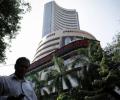
IT major TCS worst hit; it's m-cap slumped by Rs 11,811.13 cr to Rs 4,92,042.26 cr
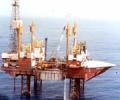
In line with the broader market, shares of ONGC on Tuesday surged nearly one per cent to touch an intra-day high of Rs 1,415 thus, fuelling the market capitalisation of the firm to a whopping Rs 3,00,511 crore (Rs 3,005.11 billion) in the morning trade.

Info Edge (India) topped expectations in its October-December quarter (Q3) results, posting strong revenue and profit growth. Its shares have rallied as much as 6.14 per cent in two days. The technology holding company's revenue rose 15.2 per cent year-on-year (Y-o-Y) to Rs 722.3 crore, driven by robust performance across its key verticals, particularly its recruitment business.
Nearly 400 stocks hit their 52-week low on BSE on Thursday.

Nine of the top-10 most valued companies together lost a whopping Rs 309,178.44 crore in market valuation last week as selloffs continued. In a holiday-shortened past week, the 30-share BSE Sensex plummeted 1,836.95 points or 3.11 per cent amid geopolitical tensions, global sell-off triggered by a hawkish US Federal Reserve and unabated foreign fund outflows. From the top-10 list, State Bank of India was the lone gainer as its valuation jumped Rs 18,340.07 crore to reach Rs 467,069.54 crore.

'The combination of star power, compelling storytelling, and action-packed drama promises to set the box office ablaze and kickstart the new quarter on a spectacular high note.'
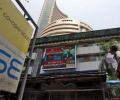
The market capitalisation of Reliance Industries plummeted by Rs 43,491.37 crore to reach Rs 17,26,714.05 crore.

Adani Wilmar (AWL) joined the elite group of companies with market capitalisation (m-cap) of Rs 1 trillion after the stock of Gautam Adani-led edible oil company hit a new high of Rs 802.80, up 5 per cent on the BSE in Tuesday's trade.
Powered by surging markets, seven companies, Reliance Communications (R-Com) and stock market debutant DLF among them, have joined the Rs 1 trillion (Rs 1,00,000 crore) club in terms of market capitalisation. New entrants are hard-core engineering and mining companies like National Mineral Development Corporation (NMDC) and Bhel - both in the public sector - and L & T. Bharti Airtel, SBI and ICICI Bank are other entrants.
The companies having suffered large erosion in values included Tata Motors, TCS, Tata Steel, Tata Power and Titan Industries

TCS took the steepest hit among the top-10 firms as its m-cap plunged Rs 17,334 cr

The BSE on Monday slipped below the crucial Rs 100-lakh crore (Rs 100 trillion) mark as the benchmark Sensex lost 261 points.

IT major nears $100 bn m-cap, accounts for 61% of the group's combined valuation.
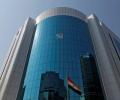
The Securities and Exchange Board of India (Sebi) is contemplating the implementation of a same-day settlement cycle, known as T+0, in two phases. This is seen as a preliminary step towards instantaneous settlement. The shorter T+0 settlement cycle is being considered for the equity cash segment as an optional mechanism, in addition to the current T+1 (Trade plus one day) cycle.

Compact sedans (Maruti Dzire, Hyundai Aura, Tata Tigor)' share in the overall sedan category grew from 68% in 2021 to 74.6% in 2024. Mid-sedans' (Honda City, Maruti Ciaz, Volkswagen Virtus) share declined from 26.2% in 2021 to 20.2%.

'Value index funds are most appropriate for long-term investors who can withstand deeper drawdowns.'
